August 19, 2026
Dog Keeps Escaping the Yard? Here's the Fence Height and Type That Actually Holds
A light orange tint on chain-link wire after prolonged rain is normal and does not always indicate a serious problem. What matters is whether that discoloration is superficial or whether it has penetrated the galvanized coating and started consuming the steel underneath.
Surface rust can be wiped away or treated with a wire brush and rust-inhibiting primer. Structural rust is a different matter entirely. When the wire begins to pit, flake in layers, or crumble at pressure points, the zinc coating that protects the steel has been fully compromised. At that stage, the tensile strength of the wire drops, meaning the fence can no longer hold tension across its span or absorb lateral force without deforming.
What Surface Rust Looks Like Versus Structural Rust
Some very minor post movement happens naturally after installation as the concrete footing cures and the surrounding soil settles. That is a one-time event that stabilizes within the first season. Ongoing leaning is a separate problem with distinct causes.
Posts lean for three primary reasons: footing failure due to frost heave or soil erosion, corrosion at the post base as described above, or physical impact from a vehicle, falling branch, or sustained pressure from overgrown vegetation. Each cause requires a different repair approach, but all three share the same consequence: a leaning post transfers stress unevenly across the entire fence line.
The Difference Between Settlement and Structural Failure
Leaning or Shifting Posts
What Happens When Leaning Goes Unaddressed
When one post tilts, the tension wire and top rail attached to it shift out of alignment. This loosens the mesh across adjacent spans, creates gaps at the bottom, and puts abnormal strain on the next post in line. A single leaning post left for one full season can pull two or three neighboring posts into misalignment. What began as a single repair becomes a multi-span correction.
Why Rust Accelerates in Specific Zones
Rust almost always starts at the points where the fence contacts soil, concrete footings, or standing water. The bottom rail and the lowest few inches of mesh are the highest-risk areas because moisture sits there longest. In regions with acidic soil or heavy clay, the contact point between the footing and the post corrodes from the inside out, which means the visible surface looks intact while the base is hollowed.
Once rust compromises a post base, the entire panel above it loses its anchor. A fence that appears upright may have almost no structural integrity left at ground level.
You let the dog out for what should be five quiet minutes, and by the time you check again, he's gone. Maybe there's a gap under the gate. Maybe the old chain-link near the back corner has a spot low enough to clear in one bound. Whatever the exit route, the pattern is familiar to a lot of property owners across the tri-state area: a fence that looked fine on paper isn't actually built for the dog living behind it.
Height gets blamed first, and it matters, but it's only part of the picture. Spacing, bottom clearance, gate hardware, and material all decide whether a fence contains a determined animal or just slows him down for a week. A fence sized for a lazy old beagle won't hold a young Australian shepherd with a running start. A fence that stops jumping might still let a terrier dig straight under it in soft clay soil after a few days of rain.
Quick Answer: Small, low-energy dogs are usually contained by a 3 to 4 foot fence with tight bottom clearance. Medium, athletic breeds need 4 to 5 feet minimum, and most contractors push that to 5 or 6 feet for anything that likes to run and jump. Large or highly motivated dogs, especially working breeds, often require a full 6 foot fence with no horizontal rails on the inside face, since rails turn into a ladder. Spacing matters as much as height: if a dog's head fits through a gap, the rest of him usually follows, so openings should stay under 2 to 3 inches depending on size. Gates fail more often than fence lines, so hardware and ground clearance at the gate deserve as much attention as the fence itself.
Why the Fence That Worked Last Year Might Not Work Now
Dogs change. A puppy that couldn't clear 3 feet turns into a 60-pound adult with real leg power inside eighteen months. A dog that never showed interest in the fence line suddenly starts pacing it daily once a new neighbor gets chickens, or once deer start crossing the back of the property at dusk. Fencing built around a dog's current size and temperament tends to fall behind as both change.
There's also a seasonal piece that a lot of homeowners in Alabama, Tennessee, and north Georgia don't expect. Heavy spring rain softens clay soil enough that a dog who never dug before finds it suddenly easy, especially right along a fence line where grass thins out from repeated pacing. A gap that would have been solid ground in August turns into loose dirt in April. If you're noticing new escape attempts after a wet stretch, the soil condition is often the actual trigger, not a change in the dog's behavior.
Matching Fence Height to the Dog, Not the Property
Height recommendations aren't arbitrary. They come from how far different dogs can realistically push off the ground and how motivated they typically are to try.
Small breeds rarely test height. Dachshunds, Yorkies, and similar dogs are far more likely to find a low gap or a loose bottom rail than to jump. A 3 to 4 foot fence usually handles them, provided the bottom of the fence sits close to the ground with no more than an inch or two of clearance.
Medium breeds are where height starts to matter more. Beagles, border collies, and similar energetic, mid-sized dogs can clear 3 to 4 feet without much effort, especially with something exciting on the other side, like a squirrel or a passing car. Five to six feet gives a real margin instead of a coin flip.
Large and working breeds need to be planned around worst-case motivation, not average behavior. German shepherds, huskies, and similar athletic large dogs can clear 6 feet when adrenaline is involved, even if they never try it on a calm day. For this group, height alone isn't the full answer. The inside face of the fence needs to be smooth, without horizontal rails, top caps, or anything a dog can use as a foothold to climb rather than jump.
Spacing and Bottom Clearance Matter as Much as the Top of the Fence
A tall fence with wide gaps or a gap-prone bottom edge still fails, just in a different way than height alone would predict. The general rule contractors use: if the dog's head fits through, the body usually follows. For small dogs, that means keeping spacing under about 2 inches. For medium and large dogs, 3 inches is a safer working limit, though breeds with narrow chests and thick coats can sometimes surprise you.
Bottom clearance deserves its own attention, especially on properties with the kind of clay-heavy soil common through the tri-state region. Clay compacts hard in dry weather but turns soft and workable after rain, and a determined digger can move a surprising amount of it in a single afternoon session. Keeping the bottom of the fence close to grade, or reinforcing it with buried mesh along known digging spots, closes off that route before it becomes a habit.
Tip: Watch where the dog spends the most time along the fence line before assuming the whole perimeter needs reinforcement. Most dogs settle into one or two favorite spots, usually near a gate, a corner with a sightline to the street, or wherever the neighbor's dog barks from. Reinforcing those specific sections first, with tighter spacing or buried wire, solves most escape problems without redoing an entire property line.
Which Fence Type Actually Fits a Determined Dog
Material choice changes the equation almost as much as height does, because some materials are naturally easier to climb, chew, or push through than others.
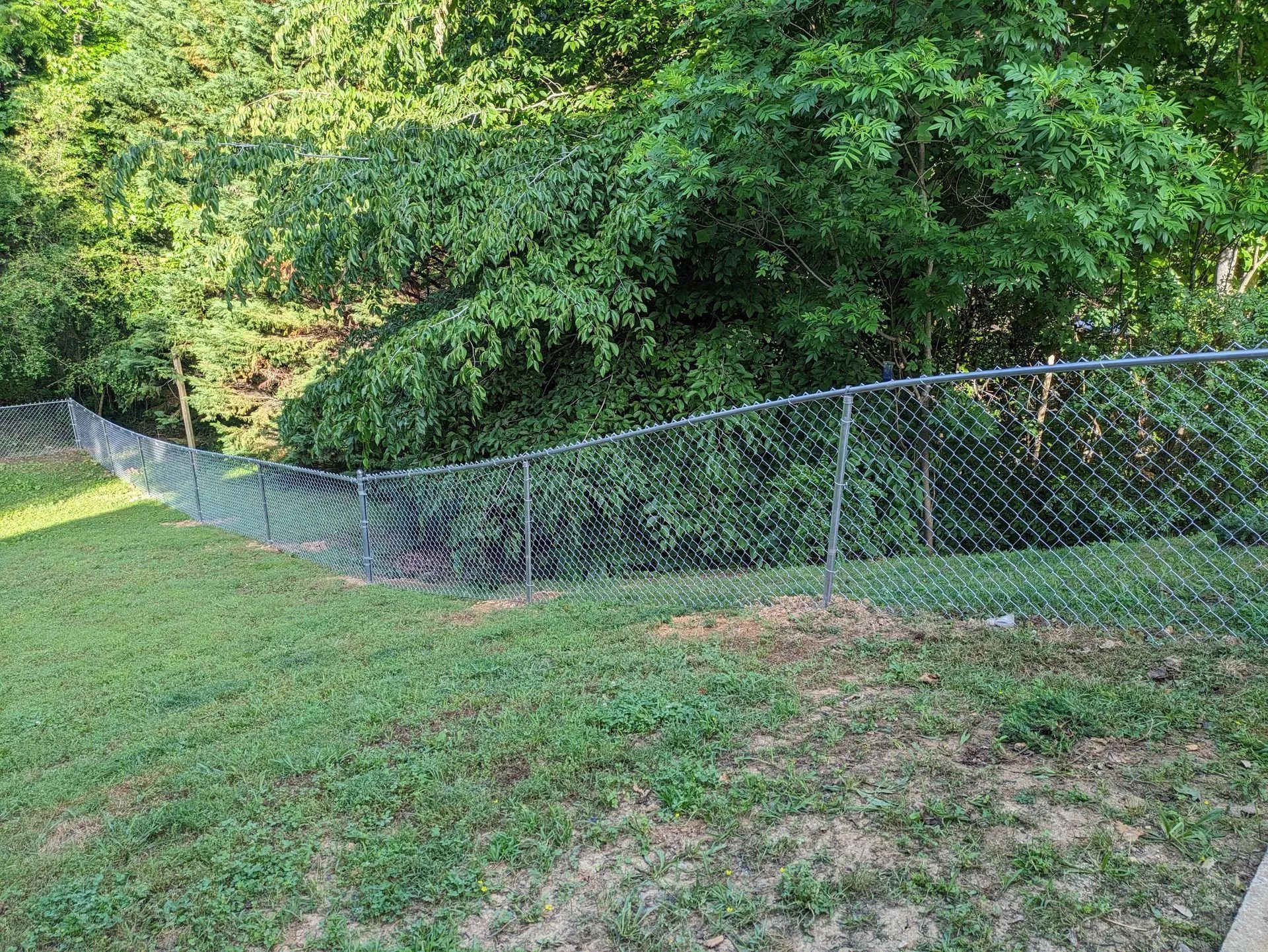
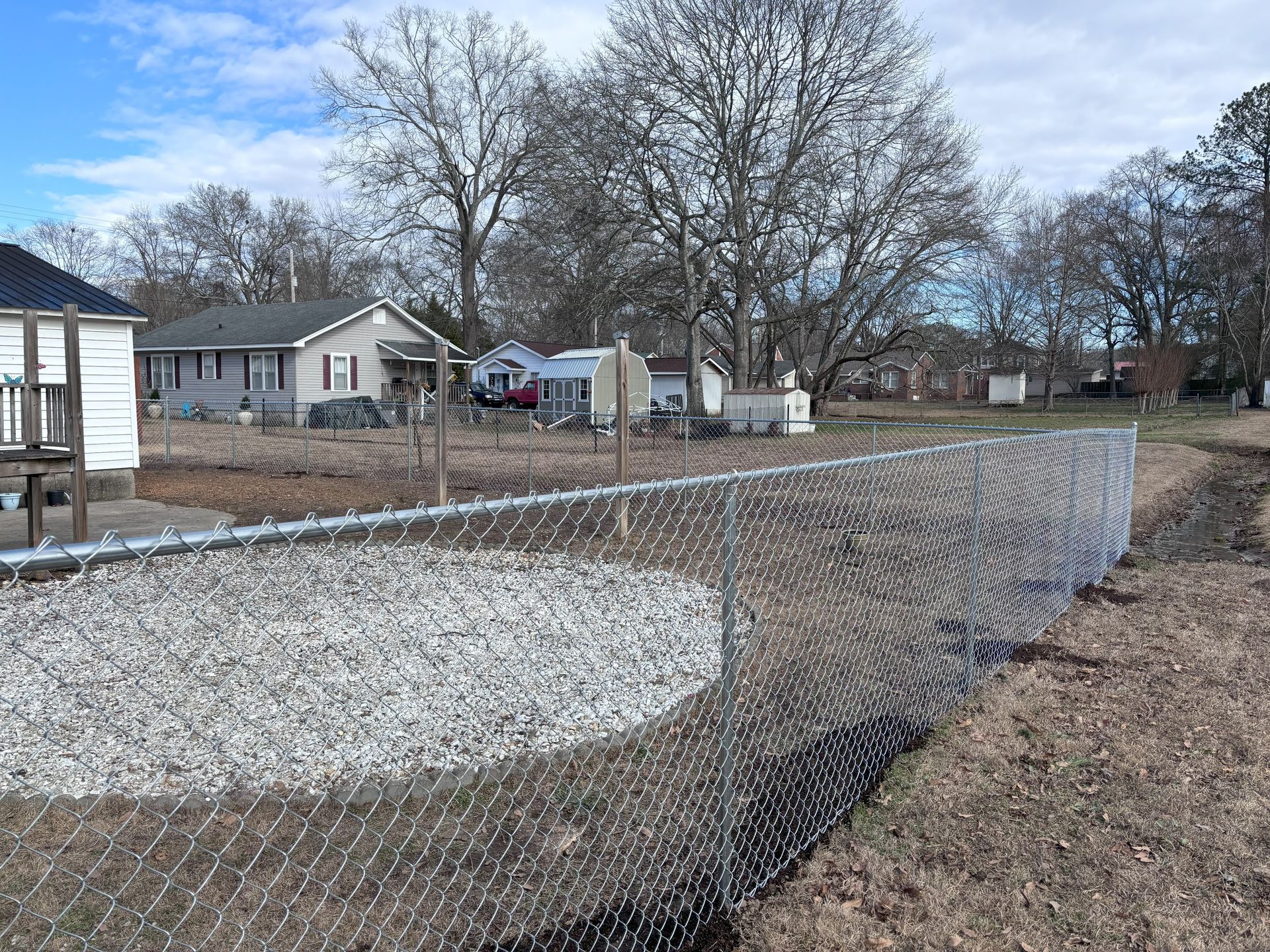
Chain-link is affordable, durable in the region's mix of humidity, sun, and storms, and holds up well over the long haul. The tradeoff for a climbing dog is that the mesh itself provides footholds, so a chain-link fence built for a determined climber usually needs to be taller than the equivalent smooth-faced fence, or paired with a taller top section that curves inward. For dogs that jump rather than climb, standard chain-link at the right height works well and stays budget-friendly.
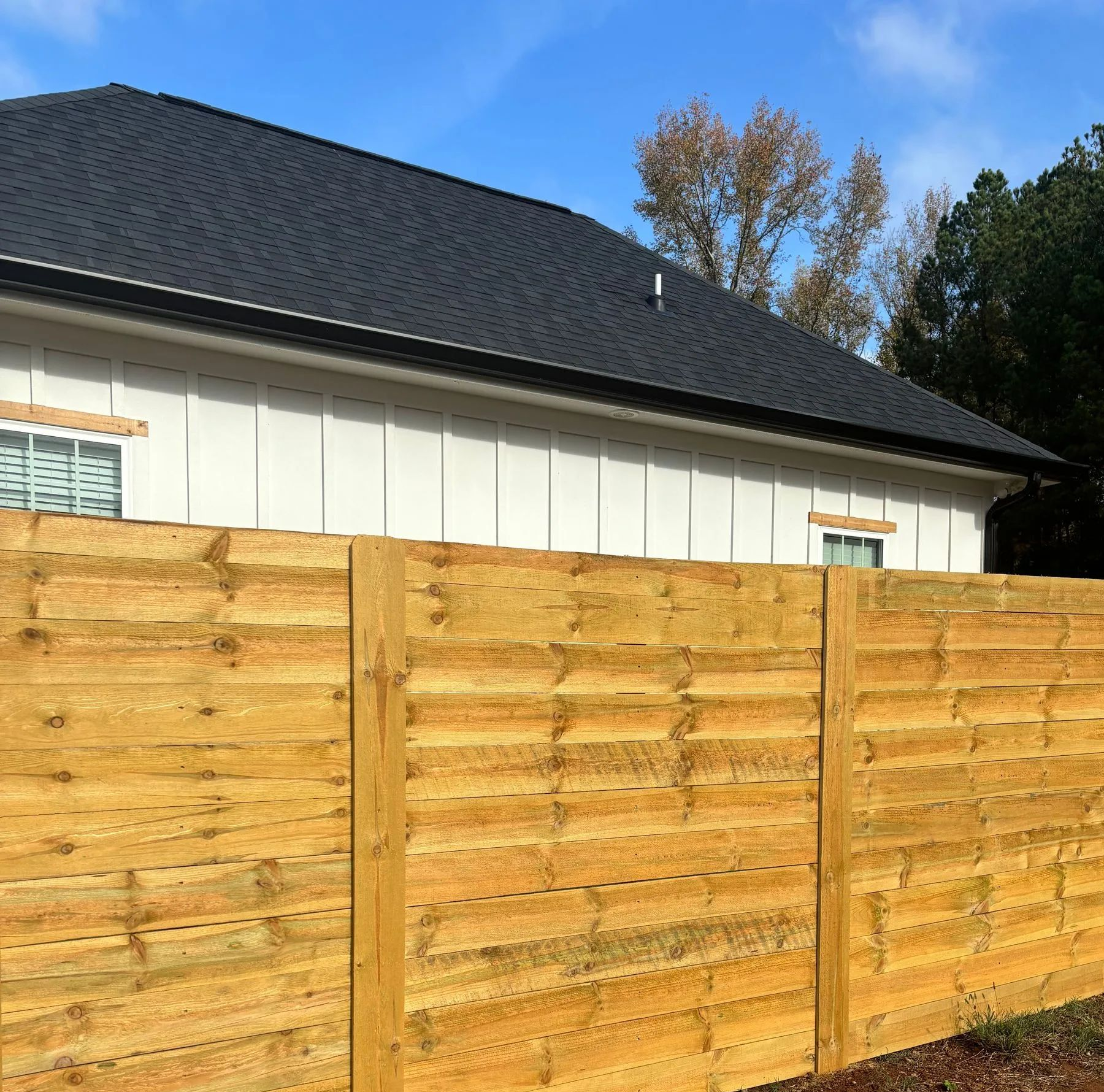
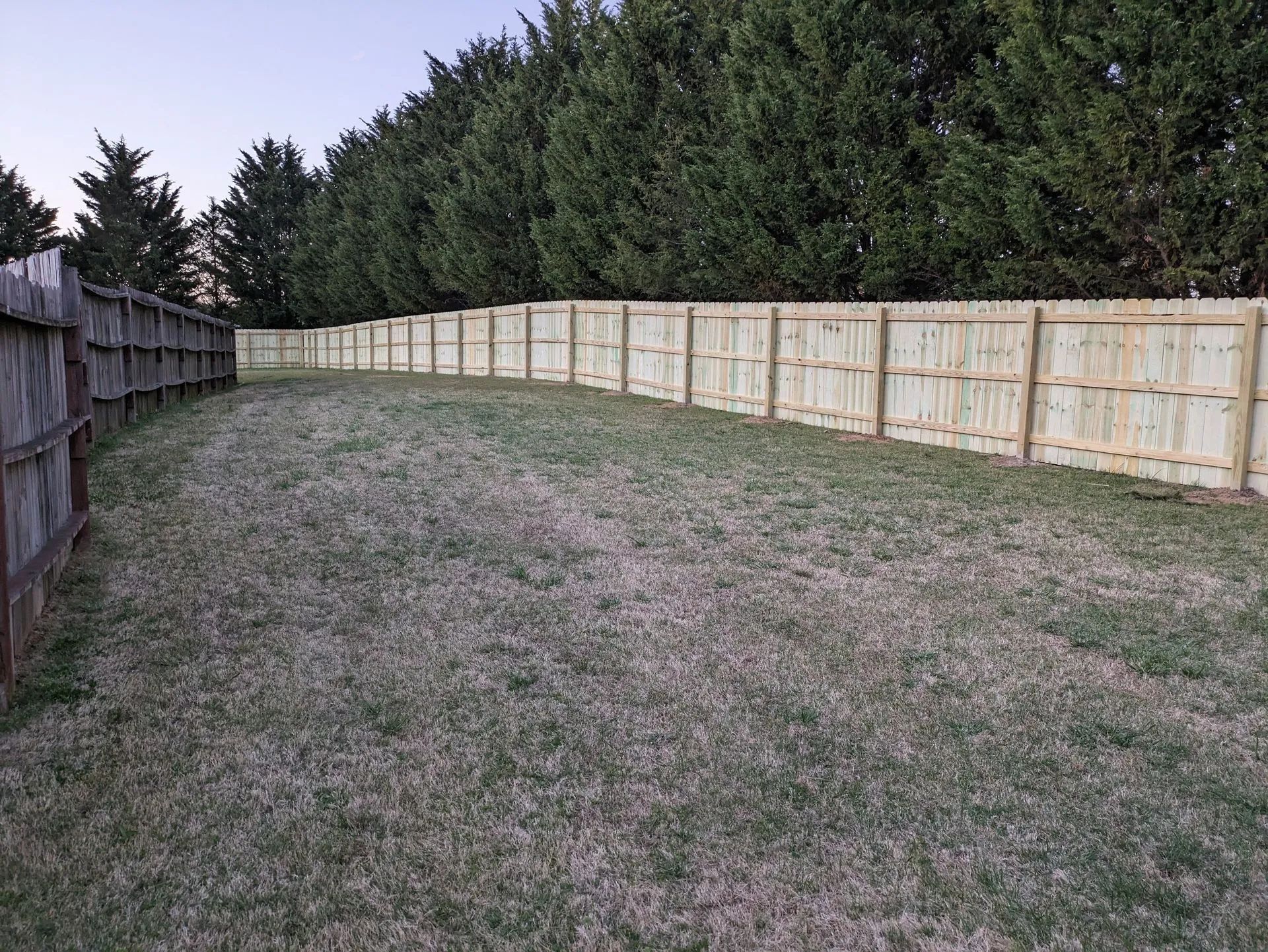
Wood privacy fencing with vertical boards and tight spacing removes the ladder effect entirely and blocks visual triggers on the other side, which cuts down on fence-line pacing and barking in the first place. It does need to be checked for gaps that open as boards shrink or shift with weather.
Vinyl offers a smooth, foothold-free surface that's genuinely difficult for a climbing dog to work with, and it resists the kind of chewing damage that wood sometimes takes from a bored or anxious dog.
Aluminum picket fencing keeps visibility open, similar to chain-link, but with narrower standard spacing that works well for many medium dogs. It's not the first choice for a dog that jumps aggressively, since the open design doesn't block the view of whatever's triggering the jump.
For rural properties with acreage, mixing types along different sections is common and often smart: a taller, solid section near the areas where the dog spends the most time, transitioning to standard chain-link or field fence along quieter stretches of the property line.
The Gate Is Usually the Real Weak Point
Ask any contractor where dogs actually get out, and the honest answer most of the time is the gate, not the fence line itself. Gates naturally create more small gaps than a continuous fence run, both at the hinge side and the latch side, and repeated opening and closing means hardware loosens over time in a way a fixed panel never does.
Warning: A gate that looks secure while closed can still fail if the latch sits low enough for a dog to nose or paw it open, or if the gate has sagged even slightly and no longer seats fully into the frame. This is one of the most common and most overlooked escape routes, and it's worth checking by hand periodically rather than assuming a gate that worked last month still works today.
Self-closing hinges, latches mounted higher than a dog can reach, and gates set slightly narrower than the opening to prevent sagging over time all reduce this risk substantially. On sloped ground, which shows up often on rural tri-state properties, gates need extra attention since uneven settling is what usually causes the bottom gap that starts the whole problem.
Planning Around Behavior, Not Just Breed
Breed guidelines are a reasonable starting point, but individual behavior matters more in practice. Two dogs of the same breed can have completely different escape drives. A dog that's food motivated and easily distracted by a treat on the other side of a fence needs different handling than a dog that's simply bored and looking for something to do during the hours the household is away.
If a dog has already shown a specific escape pattern, whether that's digging in one corner, climbing near the gate, or squeezing through a particular gap, that pattern is the most useful information available when planning a fix. General height and spacing guidelines get you most of the way there, but addressing the specific behavior that's already been observed closes the gaps that generic advice misses.
Frequently Asked Questions
How do I know if my current fence is actually too short?
Watch for pacing, jumping attempts, paws reaching the fence top, or using nearby objects for leverage. These behaviors suggest your fence lacks sufficient height, even before an actual escape occurs.
Can I just add height to an existing fence instead of replacing it?
Yes, existing fences can often be extended with additional panels or angled top sections. This approach works when posts, rails, and the existing fence structure remain strong and properly secured.
Does a taller fence work for a dog that digs instead of jumps?
No. Taller fencing addresses jumping and climbing, while digging requires reinforcement near ground level. Buried mesh, low bottom rails, gravel, or pavers can help prevent dogs from tunneling underneath successfully.
Are certain fence colors or coatings better for keeping dogs calm near the fence?
Color matters less than visibility. Solid wood or vinyl fencing blocks outside activity that may trigger barking, pacing, or jumping, while open chain-link and aluminum designs allow dogs to see distractions.
How much bottom clearance is too much for a dog-proof fence?
More than one or two inches can become an escape opportunity, particularly after rain softens the soil. Keeping fencing close to grade helps discourage squeezing, digging, and enlarging existing gaps underneath.
Will one fence type work for the whole property, or should I mix types?
One fence type can work, but mixing materials is practical for larger properties. Solid fencing suits active areas, while affordable open fencing can secure quieter sections without unnecessarily overbuilding the entire perimeter.
Building a Fence That Keeps Dogs Secure
A dependable dog fence comes down to matching height, spacing, materials, and ground clearance to the animal’s actual behavior. Jumpers need enough height and a climb-resistant interior, while diggers require attention along the bottom edge. Gates, slopes, soft soil, and nearby visual triggers can also create unexpected escape routes. Considering these details together produces a fence that feels like part of the property while providing reliable containment through changing weather, activity levels, and everyday outdoor use.
With over 8
years of experience, Simply Fencing LLC
understands how
fencing performs around homes
and properties in Higdon, AL, and throughout the surrounding tri-state region. A well-planned fence should account for the dog’s size and habits without overlooking practical concerns such as drainage, terrain, gate movement, and long-term durability. When those elements are addressed from the beginning, the finished fence provides consistent security without unnecessary complexity, helping the yard remain functional, comfortable, and appropriately enclosed for years to come.