July 17, 2026
Need to Fence a Big Yard or Lot? Why Chain-Link Still Wins on Long-Term Value
A light orange tint on chain-link wire after prolonged rain is normal and does not always indicate a serious problem. What matters is whether that discoloration is superficial or whether it has penetrated the galvanized coating and started consuming the steel underneath.
Surface rust can be wiped away or treated with a wire brush and rust-inhibiting primer. Structural rust is a different matter entirely. When the wire begins to pit, flake in layers, or crumble at pressure points, the zinc coating that protects the steel has been fully compromised. At that stage, the tensile strength of the wire drops, meaning the fence can no longer hold tension across its span or absorb lateral force without deforming.
What Surface Rust Looks Like Versus Structural Rust
Some very minor post movement happens naturally after installation as the concrete footing cures and the surrounding soil settles. That is a one-time event that stabilizes within the first season. Ongoing leaning is a separate problem with distinct causes.
Posts lean for three primary reasons: footing failure due to frost heave or soil erosion, corrosion at the post base as described above, or physical impact from a vehicle, falling branch, or sustained pressure from overgrown vegetation. Each cause requires a different repair approach, but all three share the same consequence: a leaning post transfers stress unevenly across the entire fence line.
The Difference Between Settlement and Structural Failure
Leaning or Shifting Posts
What Happens When Leaning Goes Unaddressed
When one post tilts, the tension wire and top rail attached to it shift out of alignment. This loosens the mesh across adjacent spans, creates gaps at the bottom, and puts abnormal strain on the next post in line. A single leaning post left for one full season can pull two or three neighboring posts into misalignment. What began as a single repair becomes a multi-span correction.
Why Rust Accelerates in Specific Zones
Rust almost always starts at the points where the fence contacts soil, concrete footings, or standing water. The bottom rail and the lowest few inches of mesh are the highest-risk areas because moisture sits there longest. In regions with acidic soil or heavy clay, the contact point between the footing and the post corrodes from the inside out, which means the visible surface looks intact while the base is hollowed.
Once rust compromises a post base, the entire panel above it loses its anchor. A fence that appears upright may have almost no structural integrity left at ground level.
Quick Answer: For a big yard or open lot, chain-link keeps winning on long-term value because it covers long runs efficiently, holds up for decades with almost no upkeep, and can be spec'd heavier where it counts. Galvanized chain-link commonly lasts 20 to 30 years, and vinyl-coated versions can push past 30, while a wood fence usually gives 15 to 20 years and only if you stain and reseal it on schedule. On acreage, that combination of coverage and low maintenance is hard for any other material to match.
You bought the place for the elbow room. Then you walk the property line with a tape measure, realize you are looking at hundreds of feet of open ground, and the reality of enclosing it all sets in. A big backyard, a pasture edge, a storage lot, a new build sitting on a couple of rough acres. You want it contained, you want it to last, and you do not want to be out there every other weekend babying a fence that keeps failing.
That is exactly the situation where chain-link keeps earning its place. Not because it is the fanciest option, but because over a long run of fence and a long stretch of years, it delivers coverage and durability that other materials struggle to touch without constant work. Here is why it still wins for large yards and lots, and how the right choices at install time make the difference between a fence that shrugs off decades and one that sags before its time.
Why Big Runs Change the Whole Equation
Length changes the math
On a small backyard, almost any fence works because the run is short and the upkeep is manageable. Stretch that same fence out over 300, 500, or a thousand feet and everything scales with it: the number of posts, the surface area exposed to weather, and the hours you will eventually spend maintaining it. A material that needs staining every few years is a minor chore on a short run and a genuine burden across acreage.
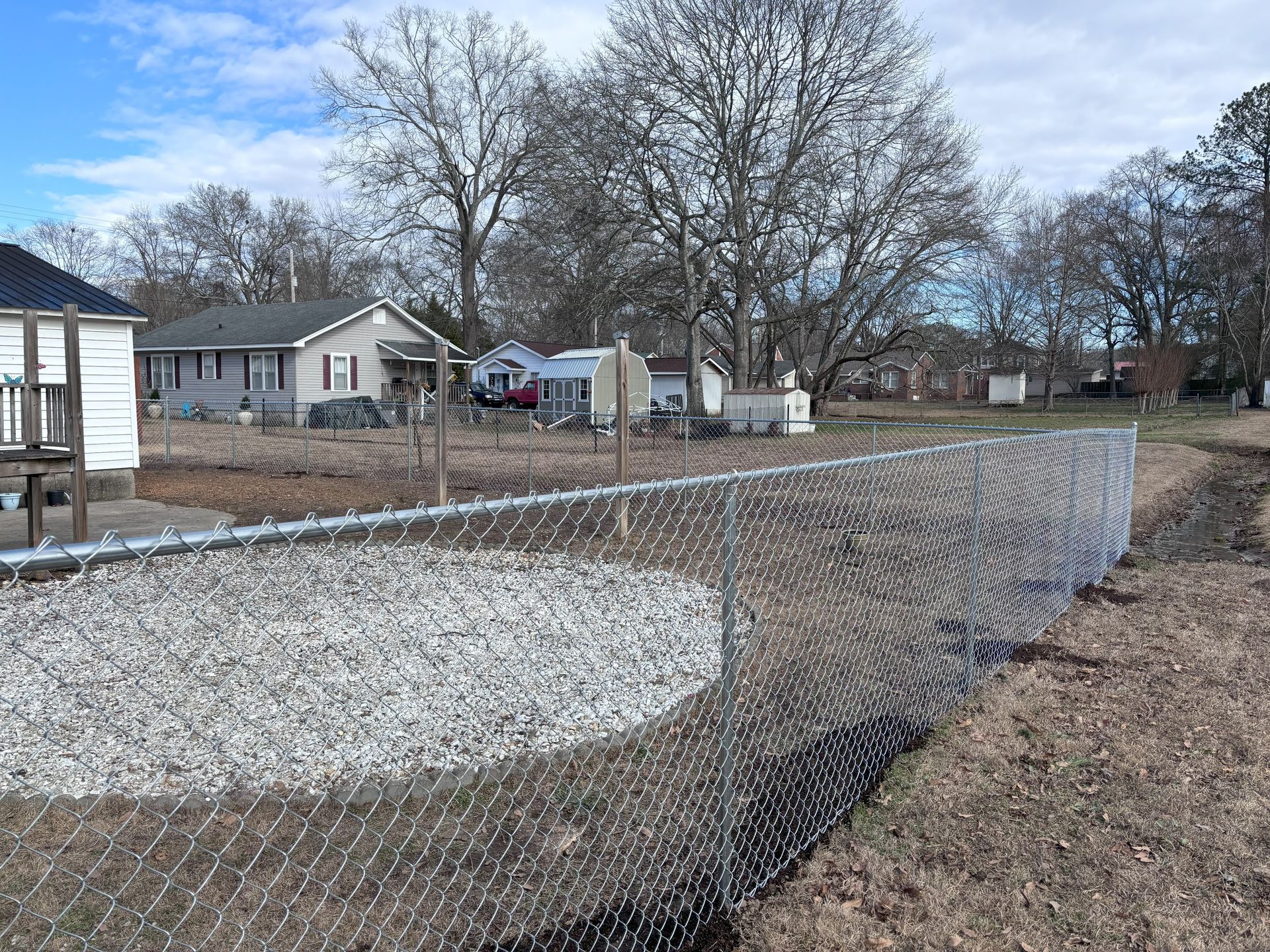
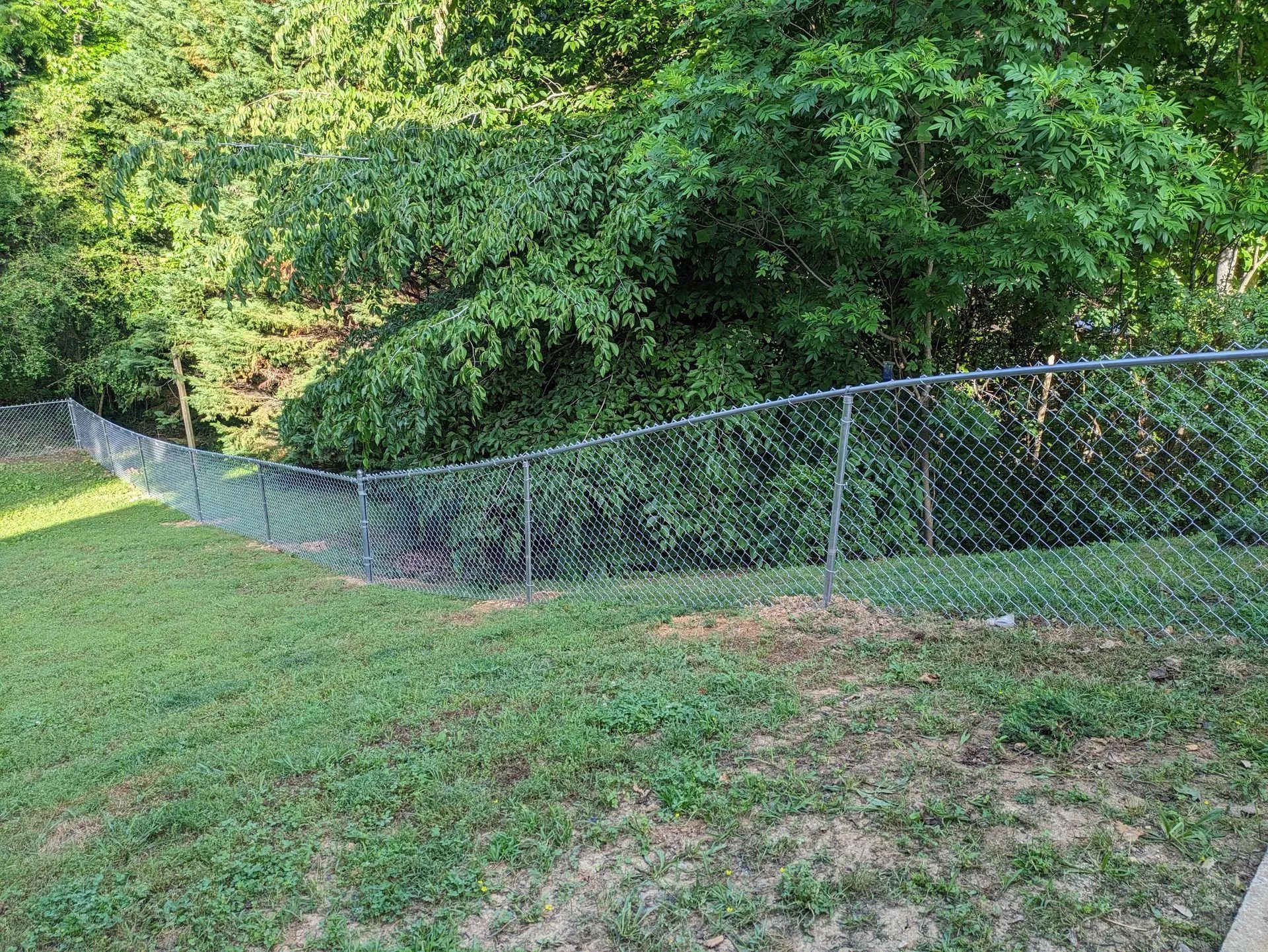
Chain-link is built for length. The fabric ships in continuous rolls, typically 50 feet each, and gets stretched between posts rather than assembled panel by panel. That means fewer interruptions across a long line and a fence that follows the ground instead of fighting it. On open, rugged, or rolling lots common across the tri-state area, that flexibility matters. The fabric can be tensioned to follow a grade change or a low spot without the boxy gaps you get trying to force rigid panels across uneven terrain.
Coverage without a privacy penalty you did not ask for
On a large lot, you often do not need to block every sightline. You need a defined boundary that contains pets, marks the property edge, and keeps things out. Chain-link's open weave does that while letting you see across your own land, which is genuinely useful when you are keeping an eye on livestock, kids, or a gate at the far end of the property. If you want privacy later, slats or screening can be woven in, but you are not forced to pay for a solid wall you never needed in the first place.
Durability Is Where the Long-Term Value Actually Lives
Decades, not years
This is the part that separates chain-link from most alternatives on a big lot. A properly installed galvanized chain-link fence commonly lasts 20 to 30 years, and vinyl-coated versions can exceed 30. Compare that to wood, which typically gives 15 to 20 years with diligent maintenance and can drop to as few as 10 years if the sealing and board replacement slip. Steel woven mesh does not rot, does not warp, and insects do not eat it. Across a long run where replacing sections is a real project, that longevity compounds into serious value.
The zinc coating is doing quiet work the whole time
Galvanized chain-link is steel wire coated in zinc, and that zinc layer is what fends off rust year after year. Not all galvanizing is equal, though, and on a big investment the difference is worth understanding. Fabric that is galvanized after weaving (GAW) gets dipped in molten zinc after the mesh is formed, coating every surface including the knuckles, and carries roughly 2.0 ounces of zinc per square foot. Fabric galvanized before weaving (GBW) coats the wire first, then the weaving process scrapes zinc off at every bend, leaving around 1.2 ounces per square foot and dozens of little corrosion starting points. In practical terms, GAW commonly runs 20 to 25 years while GBW leans closer to 10 to 15. On humid tri-state summers where moisture drives corrosion, spec'ing the heavier coating up front is one of the quietest ways to buy yourself an extra decade.
Vinyl coating adds a second line of defense
A PVC layer bonded over the galvanized wire adds corrosion protection, softens sharp edges, and lets the fence blend into a treeline in black, green, or brown instead of glaring silver. It also pushes typical lifespan into the 25-to-30-year range. If the vinyl ever chips at a contact point down the road, the galvanizing underneath is your backup, which is exactly why coating fabric that started as GAW matters more than coating cheap fabric to look nice.
Tip: When you get a fence quoted for a large lot, ask specifically about the wire gauge and whether the fabric is galvanized after weave or before weave. Those two details drive how long the fence lasts far more than its appearance on day one, and they are easy to overlook when you are focused on the total length.
The Framework and the Ground Line Do the Heavy Lifting
Posts and spacing hold everything upright
The fabric is only half the system. Line posts along the run and the heavier terminal posts at ends, corners, and gates carry the tension of stretched mesh. Standard spacing is about 10 feet on center, but on a windy, exposed lot or a taller fence, tightening that to 8 feet adds rigidity where the wind wants to push. Terminal posts have to be set deep and solid because they take the pull of the whole run, and on a long line every corner is a potential weak point if it is not braced right.
A tension wire along the bottom earns its keep on acreage
One of the most common failures on rural fence is animals pushing under the bottom edge, or the mesh lifting where the ground dips. A 7-gauge tension wire run along the base, tied to the fabric, spreads that force across the whole run instead of letting it concentrate at one weak spot. On a bottom rail installation, a rigid rail does the same job and makes the line harder to lift entirely. For a big lot with pets, livestock nearby, or wildlife pressure, that bottom detail is what keeps the fence doing its job at the ground level where most trouble starts.
Warning: Do not judge a large-lot fence by the fabric alone. A heavy 9-gauge mesh stretched onto undersized posts or set at spacing that is too wide will still lean, sag, and pull corners out of plumb over a long run. The framework has to be matched to the fabric weight, the fence height, and the wind exposure, or the strength you paid for in the wire never gets a chance to do its job.
Maintenance Is Where Acreage Owners Feel the Difference
Here is the part that shows up every year for the rest of the fence's life. Wood on a big run means staining or sealing every two to four years, power washing to hold off mold in humid air, replacing warped or rotted boards as they go, and checking posts for ground-level rot. Multiply that across hundreds of feet and it becomes a standing chore that never really ends.
Chain-link asks for almost none of that. Rinse it down when it gets dirty, touch up a rare rust spot, and retighten a tension band in the uncommon event of sag. That is close to the whole list. Over 20 or 30 years on a large property, the hours and effort you never spend maintaining chain-link are a real, recurring part of its value, even if they never show up as a line item. When you are weighing what a fence actually costs you in attention over its life, the low-maintenance material on a long run is usually the one that wins.
Frequently Asked Questions
Is chain-link really the most practical choice for a large yard or lot?
Yes. Chain-link fencing provides durable, low-maintenance protection for large properties while covering long distances economically. It handles uneven terrain well, lasts for decades, and remains an excellent choice for acreage, work lots, and residential boundaries.
How long will a chain-link fence last on my property?
A professionally installed galvanized chain-link fence typically lasts twenty to thirty years, while vinyl-coated options often last even longer. Choosing quality materials and protective coatings helps resist corrosion, weather exposure, and everyday wear over time.
What gauge chain-link should I use for a big lot?
The right wire gauge depends on your property's needs. Lighter gauges suit residential boundaries, while heavier gauges provide greater strength for large dogs, livestock, windy locations, or areas exposed to frequent impacts and demanding conditions.
Can chain-link handle sloped or uneven acreage?
Yes. Chain-link fencing adapts well to changing elevations because the mesh stretches continuously between posts. Proper installation maintains consistent tension, allowing the fence to follow slopes, rolling terrain, and uneven ground while remaining secure and attractive.
Will animals push under a chain-link fence?
They can if the bottom edge lacks proper support. Installing a tension wire or bottom rail secures the fence, reducing gaps beneath the mesh and helping contain pets while discouraging wildlife from entering beneath the fencing.
Can I add privacy to a chain-link fence later?
Yes. Privacy slats, screening fabric, or climbing plants can be added anytime after installation. These options increase privacy without replacing the existing fence, allowing you to customize visibility as your property's needs change over time.
Making the Long Run Pay Off
A big yard or lot is exactly where the right fence choice compounds. Every foot you enclose is a foot you will either maintain or forget about for the next few decades, and chain-link is built to be the fence you forget about. Its value on large properties is not about looking impressive on install day. It is about covering long runs efficiently, following the ground instead of fighting it, standing up for 20 to 30 years, and asking almost nothing of you along the way. Spec the coating and gauge to match how each stretch gets used, back the fabric with framework that can hold it, and lock down the bottom edge, and you end up with a boundary that quietly does its job long after the novelty of the new place has worn off.
Plan a
chain-link fence
built to last across your whole property in Higdon, Alabama — Fencing a big yard, pasture edge, or lot deserves the right gauge, coating, and framework matched to each stretch, not a one-size guess that sags before its time. With 8
years of experience, Simply Fencing LLC
installs durable, weather-resistant chain-link fencing for open backyards, acreage boundaries, and work lots throughout the Alabama, Tennessee, and Georgia tri-state area. Request a walkthrough of your property line to map the layout, coating, and gauge that will hold up for decades with almost no upkeep.